Resources for Caregivers Like You
Insights, tips, and trusted resources when you need support the most.
__________________

Taking Care of Yourself: Tips for Caregivers
Taking care of yourself is one of the most important things you can do as a caregiver. Find tips for making time for yourself.
Sharing Caregiving Responsibilities
Caring for a parent or another older relative or friend often requires teamwork. Learn how to work effectively to ensure good care and support caregiver health.

Frequently Asked Questions About Caregiving
Are you caring for the needs of an ill, older family member or friend? These common questions and answers about caregiving should help you get started.

8 Ways to Overcome Your Aging Parent’s Loneliness
With modern technological advances, it is easier to stay in touch than ever before. Smart phones, social media apps, and the internet have made it possible to contact anyone, anywhere, at any time. Despite these advances, research suggests that Americans, as a society, are lonelier than ever before – and seniors experience that loneliness at a higher level than any other age group.

Tip Sheet: How to Be the Best Caregiver You Can Be
Many of us know an older person with a serious illness or an ongoing health problem. In fact, half of all adult Americans have at least one chronic condition for which they need help from a caregiver, family member, or friend. If you’ve wondered how to show an older person that you care or how you can help them, here are some tips on how to be the best “care coach” or “care champion” you can be.
Everything You Need to Know About Alzheimer’s Disease as a Caregiver, According to Experts
Plus, tips for avoiding caregiver burnout

Caregiver Worksheets
Download, print, and copy NIA’s worksheets to help you provide care for family members or friends who need help with daily living.

Does an Older Adult in Your Life Need Help?
Get tips for identifying signs an aging parent or relative needs help and what you can do.
Getting Started With Caregiving
New to caregiving? Read this article to learn how to get started.

Grandfamilies and Kinship Families: Caring for Young Relatives
Find suggestions and support for taking care of yourself while caregiving for younger relatives.

Healthy Aging Tips for the Older Adults in Your Life
Find tips from NIA on how to help support healthy aging in older family members. Tips include preventing social isolation, promoting physical activity, encouraging healthy eating, and more.
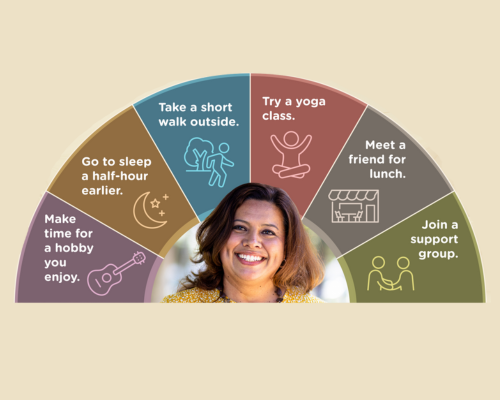
Infographic: Take Care of Yourself as a Caregiver
View an infographic on ways to take care of yourself as a caregiver.

Services for Older Adults Living at Home
Learn about the services available for older adults living at home and their caregivers.

What Is Respite Care?
Respite care can provide relief for family caregivers. Learn about how respite care could help your family, and find resources to connect with services.
An Elderly Mother and an Aging Son: A Journalist’s Caregiving Story
The pandemic’s ongoing toll has prompted more people to consider caring for an aging parent, partner, or spouse at home. But with someone turning 65 every eight seconds in this country, how prepared are we?
Bathing (for dementia)
People with dementia are often resistant to bathing. They will claim they just showered, or that they will do it later, or outright refuse to bathe. Unless someone is incontinent, daily bathing is not necessary.
Caregiving and the holidays: from stress to success!
For many caregivers the holiday season gives rise to stress, frustration and anger, instead of peace and good will. Caregivers may feel resentful towards other family members who they feel have not offered enough assistance.
Dementia and Pain Management: A Personal Story
My father was screaming in the nursing home. The staff had tried changing any number of his medications, but nothing stopped his agitation until the physician ordered Vicodin, a strong painkiller.
Dental Care (for dementia)
Dental hygiene is important for overall health. Poor dental hygiene may lead to heart disease, gingivitis, stroke, osteoporosis, and respiratory disease.
Feeding and Nutrition (for dementia)
Avoid food fights. Make mealtime as pleasant as possible. Encourage someone to eat, but don’t demand, cajole, or threaten. Someone with dementia may not know what he/she wants to eat.
Food for Thought: Nutrition for People Living With Dementia
Two years ago, Anna’s 84-year old mother was diagnosed with an Alzheimer’s-type dementia. As the disease progressed, Anna was increasingly finding spoiled food in her mother’s refrigerator.
Hands-On Skills for Caregivers
When you’re a caregiver, finding time to take care of your own physical needs is difficult enough, but taking care of the physical needs of someone else is even more challenging.
Helping to Feed Persons with Dementia
Partner Information This video is part of Family Caregiving Video Series: Special Diets funded by the Ralph C. Wilson Jr. Foundation.
Incontinence (for dementia)
Talk to the physician to see if medication, enlarged prostate or a urinary tract infection might be causing the problem, especially if there is a sudden onset of incontinence. Investigate various incontinence supplies.
Medication Management Basics
Medication Management for People with Dementia
Questions to Ask when Considering Psychotropic Medication for Someone with Dementia
Personality and behavioral changes caused by dementia can be challenging for the people who provide care. Medications may be able to help alleviate the symptoms.
The MIND Diet: Eating to Reduce the Risk of Alzheimer’s Disease
In the United States alone, it is estimated that more than 6 million Americans are living with dementia. This special webinar presented by public health nutritionist Jocelyn Dubin explains the tools you need to feed your brain and reduce your risk of Alzheimer’s and other dementia.
Toileting (for dementia)
Set up the bathroom to make it as easy as possible for the person to get on to and off of the toilet, e.g. having a raised toilet seat and grab bars.
 Golden Connections | Senior Caregiving Platform